
Inter-Caste & Inter-Religion Marriage: Legal Protection Guide
It remains a challenging choice for many Indian families to have their son/daughter marry outside their own caste/religion. Though legally the choice of a marriage partner lies completely in the hands of two adults who want to get married, the situation for such couples becomes difficult due to various kinds of pressure and threats they receive from society and family members. Knowing all about your legal rights in relation to inter-caste or inter-religion marriage is a must for every couple, both before and after marriage, to avoid unnecessary problems.The guide gives answers to all questions related to your rights as well as explains the marriage registration procedure from the point of view of an experienced love marriage lawyer from Jaipur.
Is Inter-Caste or Inter-Religion Marriage
Legal in India?
Yes. The right to choose a partner of one’s choice is enshrined in the Indian Constitution. It comes under Article 21 of the Indian Constitution. This article is called “Right to life and personal liberty.” Supreme Court of India has ruled time and again that it is a fundamental right of an individual to make a choice of his/her own for a partner of his/her life.No law in India bars inter-caste and inter-religion marriages in India. There is a particular Act called “Special Marriage Act, 1954” which has been brought in the interest of two individuals who wish to marry each other even though there is a difference in their religion or caste. Through this Act, any two individuals belonging to any religion or community can marry without changing their religion or caste. It is a widely used mode of inter-caste and inter-religion marriage in India.
Legal Framework for Inter-Caste and Inter-Religion Marriage
1. The Special Marriage Act, 1954
This is the main Act that regulates marriages between members of different castes or religions. In accordance with the provisions of this Act:
This Act allows the couple to marry as a civil contract, regardless of personal religious laws, such as the Hindu Marriage Act or Muslim Personal Law.
2. Personal Laws and Conversion-Based Marriages
In some cases, couples may prefer to get married by a personal law, say, conversion to the faith of the other spouse and then getting married according to the Hindu Marriage Act, 1955, or other relevant personal laws. Although this is a perfectly legal option, one needs to tread cautiously since courts have scrutinized conversion just for marriage in some cases. A good marriage lawyer or a court marriage lawyer will be able to guide you regarding which way you should go.
3. Right to Privacy and Protection from Interference
As per the decisions of the Supreme Court, it is quite clear that adults are entitled to cohabit and get married without any hindrance on the part of their families, caste panchayat, or even any self-appointed organization in the community. Threatening, harassing, or coercing a couple who have married of their own will can be considered an offense, and the court has instructed the police authorities to ensure their safety if need be.
Legal Protection Available to Inter-Caste and Inter-Religion Couples
Sometimes, couples may face not just disagreement but threats of violence, restriction of movement, or annulment of the marriage. The Indian legal system offers some ways for protection:
Protection Petition in High Courts:
In case there is fear of any kind of danger or threat to the couple by the family members or community following marriage, they can seek police protection through a writ petition to the High Court. Courts in India have always given such protection to the couple getting married out of their own will.
Police Protection:
One can approach the local police for police protection in case they want it. There are special cells in most of the states dealing with the issues arising out of honour-based threats.
Protection Against Forced Separation:
No member of the family, no caste group, and no organisation is empowered under any law to annul or dissolve or force separation from any legally solemnized marriage of two adults.
Criminal Actions:
Any kind of threat, assault, detention, or harassment against the couple can be reported under criminal law.
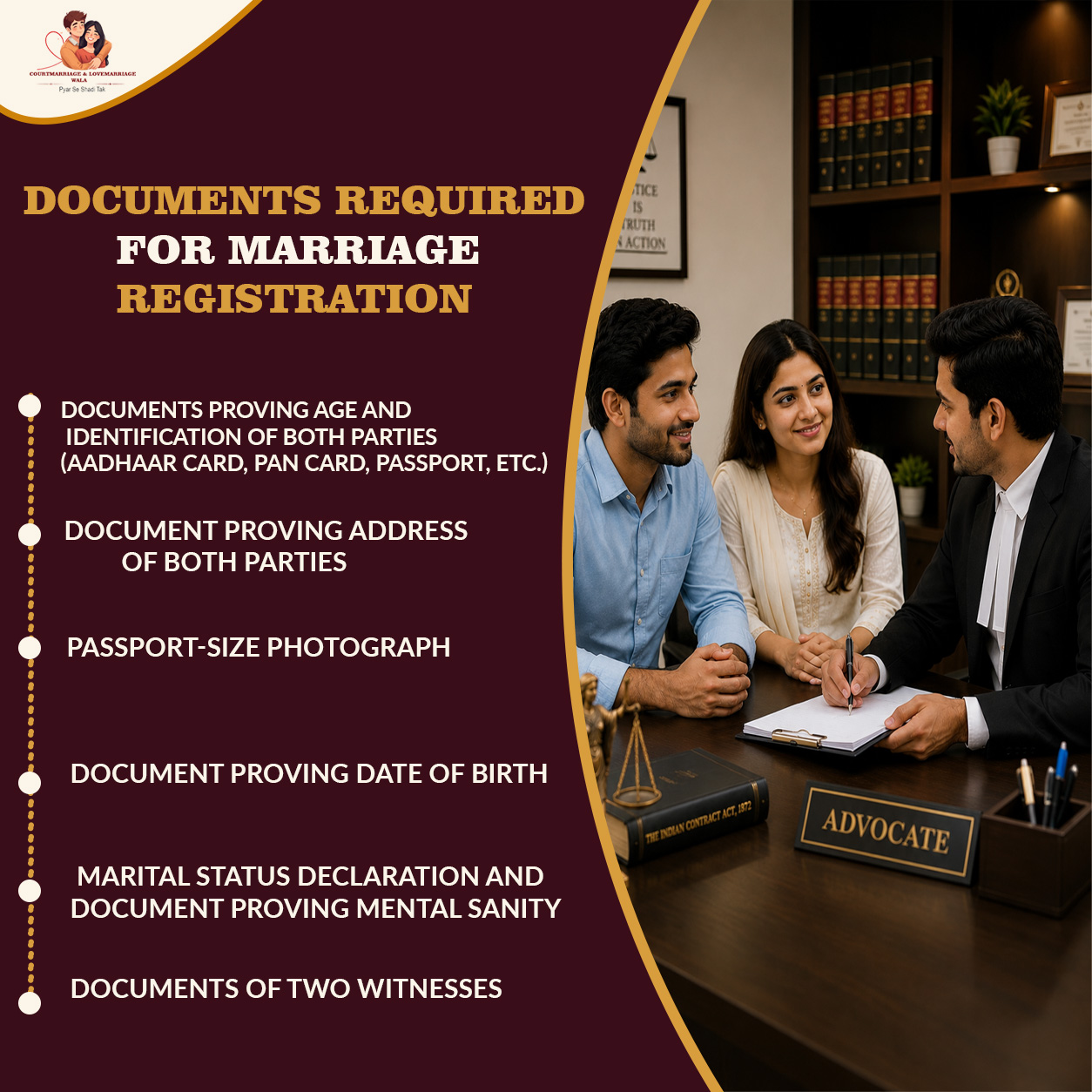
Documents Required for Marriage Registration
Irrespective of caste or religion, the documents needed for marriage registration according to the Special Marriage Act would include:
Because there may be some differences in procedures as far as states and registrar offices are concerned, it is recommended to take help from an expert in marriage registration.
Common Challenges Faced by Inter-Caste and Inter-Religion Couples
Despite having the law on their side, couples may face some practical problems:
Family and social pressures:
The objection raised by parents and other relatives could create emotional issues and sometimes even try to obstruct the marriage.
Objection during the notice period:
With respect to the notice period of 30 days provided in the Special Marriage Act, an objection can be raised, which could be legally countered through proper guidance.
Safety issues:
In sensitive situations, couples might require the assistance of the police or have to go to court in advance.
Confusions regarding the correct legal course of action:
Decisions have to be taken whether to proceed under the Special Marriage Act or get married under any personal law.
Having the services of a competent marriage lawyer, or love marriage advocate of Jaipur, at each of these steps would certainly make the whole process easier for them.
Steps to Protect Your Rights Before and After Marriage
1.Consult a marriage law advocate
early — or reach out to a reliable court marriage lawyer — understanding your legal standing before the wedding helps you prepare documentation correctly and anticipate potential objections.
2.Register your marriage promptly —
A registered marriage certificate is strong legal proof of your marital status and is essential for protection petitions, if needed.
3. Keep evidence of any threats or intimidation —
Messages, emails, or witness statements can support a protection petition or police complaint.
4. Approach the High Court for protection
If needed — this is a well-established and effective legal remedy for couples facing safety concerns.
5. Stay informed about your rights —
Knowledge of the law is one of the strongest tools a couple has against unlawful interference.
Why Love Marriage Wala Is the Best Court Marriage Lawyer for Inter-Caste &
Inter-Religion Couples
When you're planning an inter-caste or inter-religion marriage, having an experienced court marriage lawyer by your side makes all the difference — not just for paperwork, but for your safety, confidence, and peace of mind. Here's why couples trust Love Marriage Wala:
1. Experienced Court Marriage Lawyer
Our advocate specialises in court marriages under the Special Marriage Act — the exact law that applies when partners are from different castes or religions. We handle the entire legal process personally, so you're not left guessing.
2. Confidential & Judgement-Free Legal Advice
As your lawyer, everything you share stays private. We know these situations often involve family pressure or sensitivity, and we make sure you feel supported, not judged, at every meeting.
3. Complete Documentation & Filing Support
From notice of intended marriage to affidavits and required certificates, our lawyer ensures every document is correctly prepared and filed — reducing the chances of rejection or delay.
4. Legal Protection Guidance, Not Just Paperwork
If your family is opposing the marriage or you're facing threats, our advocate can explain your legal rights under Supreme Court rulings like Shakti Vahini v. Union of India, and guide you on seeking police protection or approaching the High Court if required.
5. Local Court Knowledge in Jaipur, Rajasthan
As a Jaipur-based court marriage lawyer, we know the local marriage registrar's office, common procedural delays, and how to navigate them — something a generic online checklist can't offer.
6. Personal Support Throughout the Process
Your lawyer stays involved from your first consultation until your marriage certificate is issued — answering questions and handling issues as they come up, not just showing up once.
If you're planning an inter-caste or inter-religion court marriage and want a trusted lawyer to guide you safely and legally, book a free, confidential consultation with Love Marriage Wala today.
Why Legal Guidance Matters
While inter-caste and inter-religion marriages may be legal and constitutional in nature, the personal and social issues that arise in connection with them can be complex in nature and might go beyond simply following the law – they can call for professional and empathic advice and guidance as well. Right from finding the right legal process to follow, to completing all necessary documentation, and to seeking legal protection where required, legal support will help the couple get married confidently.
At Love Marriage Wala, our team of highly qualified love marriage advocate Jaipur experts and experienced court marriage lawyers helps couples in every step involved in their inter-caste and inter-religion marriage – including marriage registration, court marriage, protection petitioning, and consultation in matters related to family law. Should you have plans to marry out of your religion or caste, we can provide you with an initial and confidential consultation.